3 Ways to Boost Your Transportation Prioritization Process
See leading best practices on transportation cross-asset planning from our subject matter experts

Decision Lens replaces disconnected, manual processes with an integrated, configurable platform that supports end-to-end STIP and TIP development, management, and reporting.
As data volumes grow and reporting needs evolve, transportation planning processes built on spreadsheets and aging database systems begin to break down.
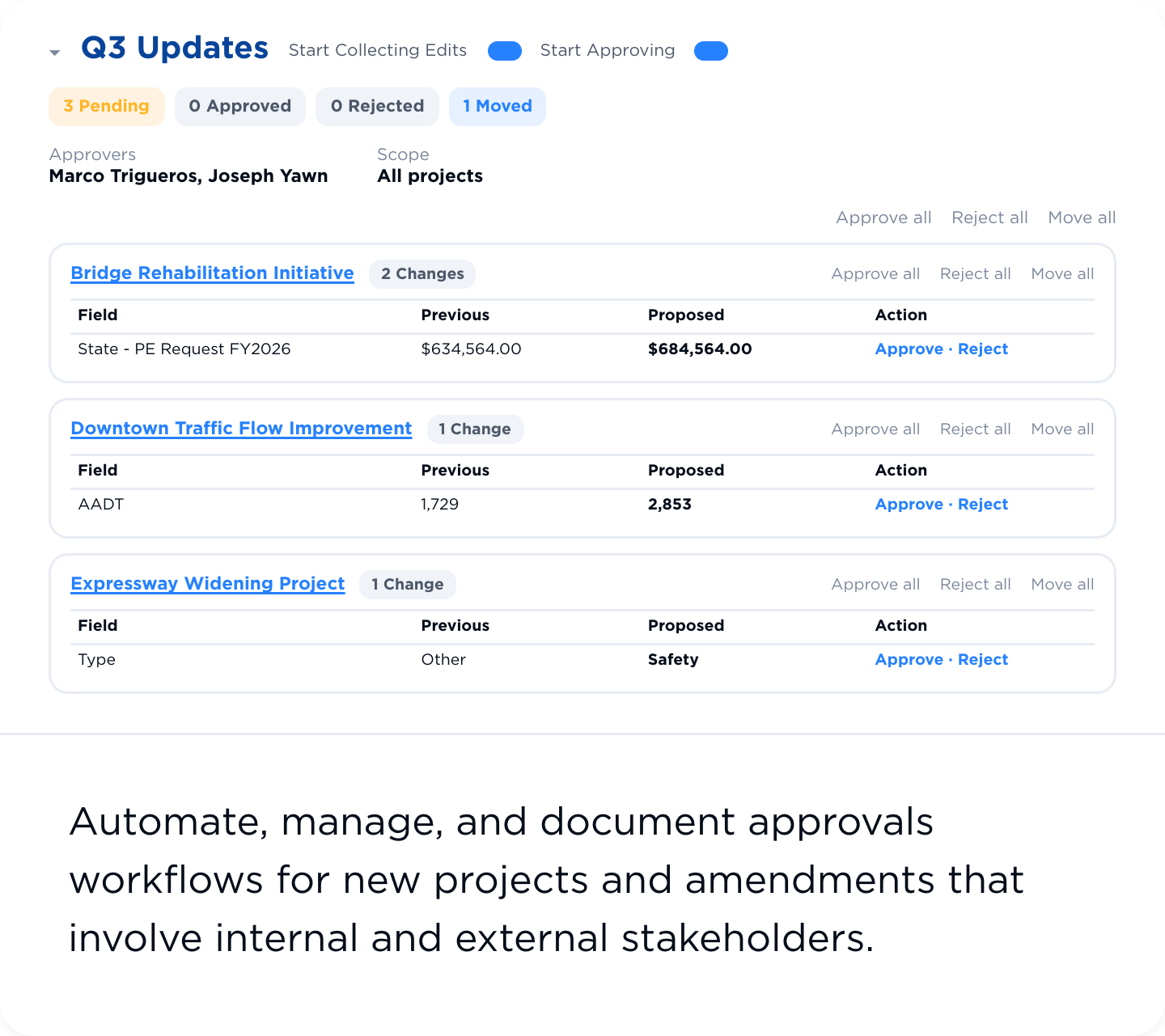
STIP and TIP planning becomes fragmented, limiting collaborative access and making it difficult to maintain a single source of truth. Amendments and updates require repeated manual reconciliation across disconnected spreadsheets and reports, driving duplicate data entry, slowing decisions, and increasing risk.
Connecting Data, Plans, and Stakeholders
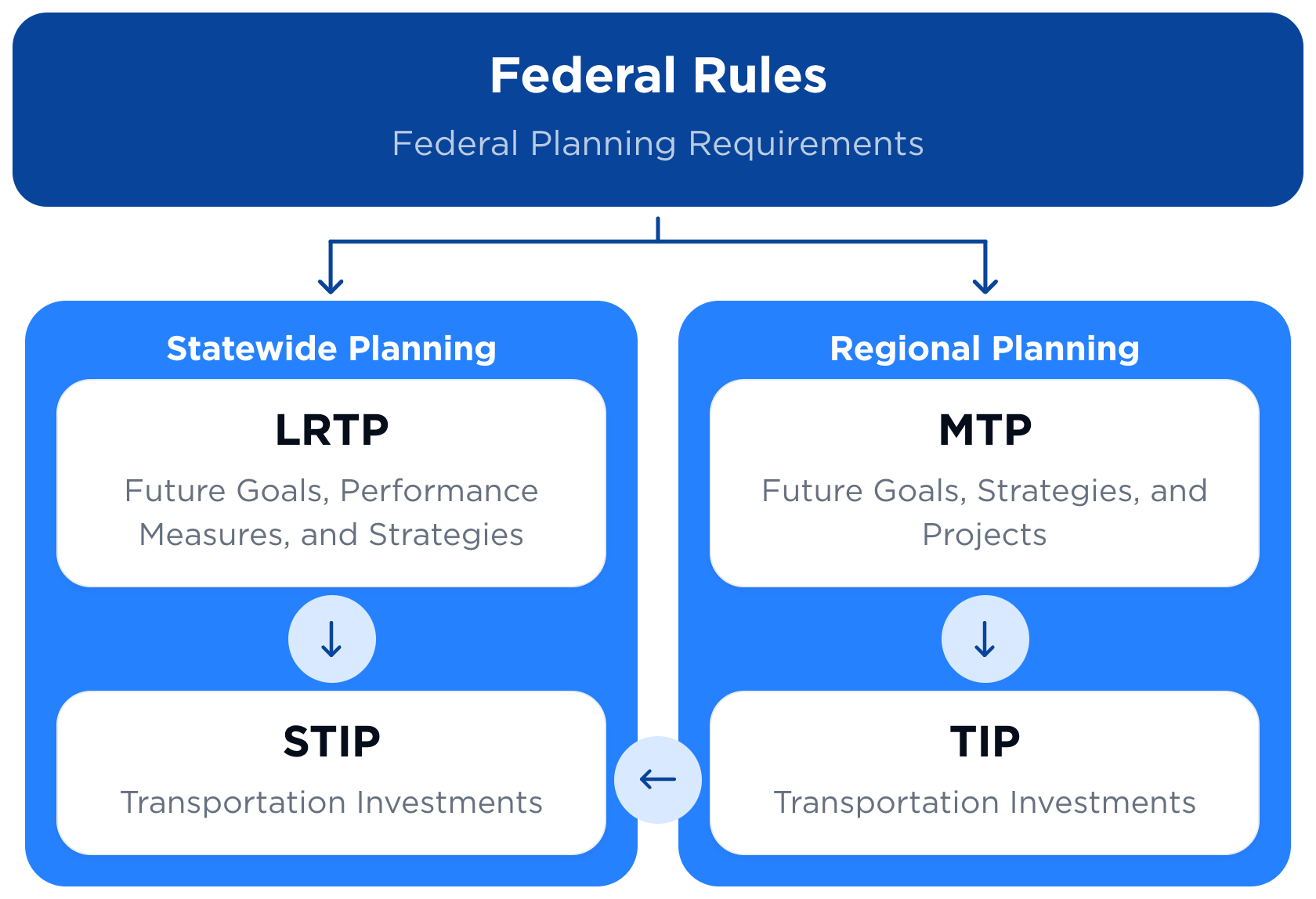
Disjointed data and fragmented planning processes undermine effective decision-making. Agencies struggle to align LRTPs, MTPs, STIPs, and TIPs while coordinating across districts, jurisdictions, and planning partners—leading to duplication, delays, and inconsistent evaluation.
Building Consistent, Defensible Prioritization
Inconsistent scoring methods and manual workflows make it difficult to justify project selection. Without a clear, repeatable framework tied to performance goals, agencies spend more time defending decisions than confidently advancing investments.
Optimizing Funding with Strategic Agility
Limited visibility into funding trade-offs weakens execution. Agencies must allocate dollars across programs and constraints while incorporating cost shifts and amendments—without disrupting momentum or losing alignment to performance targets.
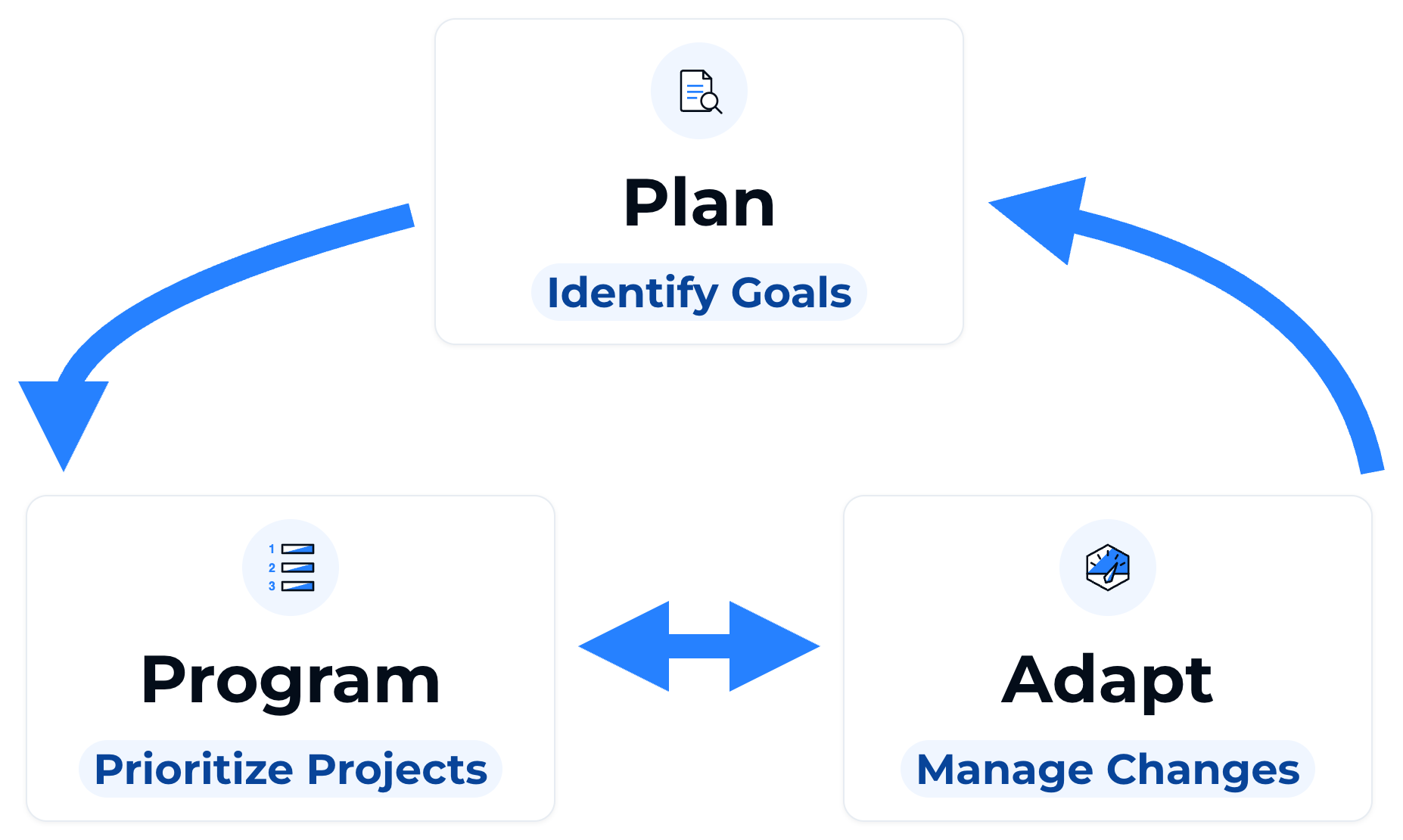
Decision Lens provides a structured framework that connects shared data, performance measures, and funding decisions within one consistent planning environment.
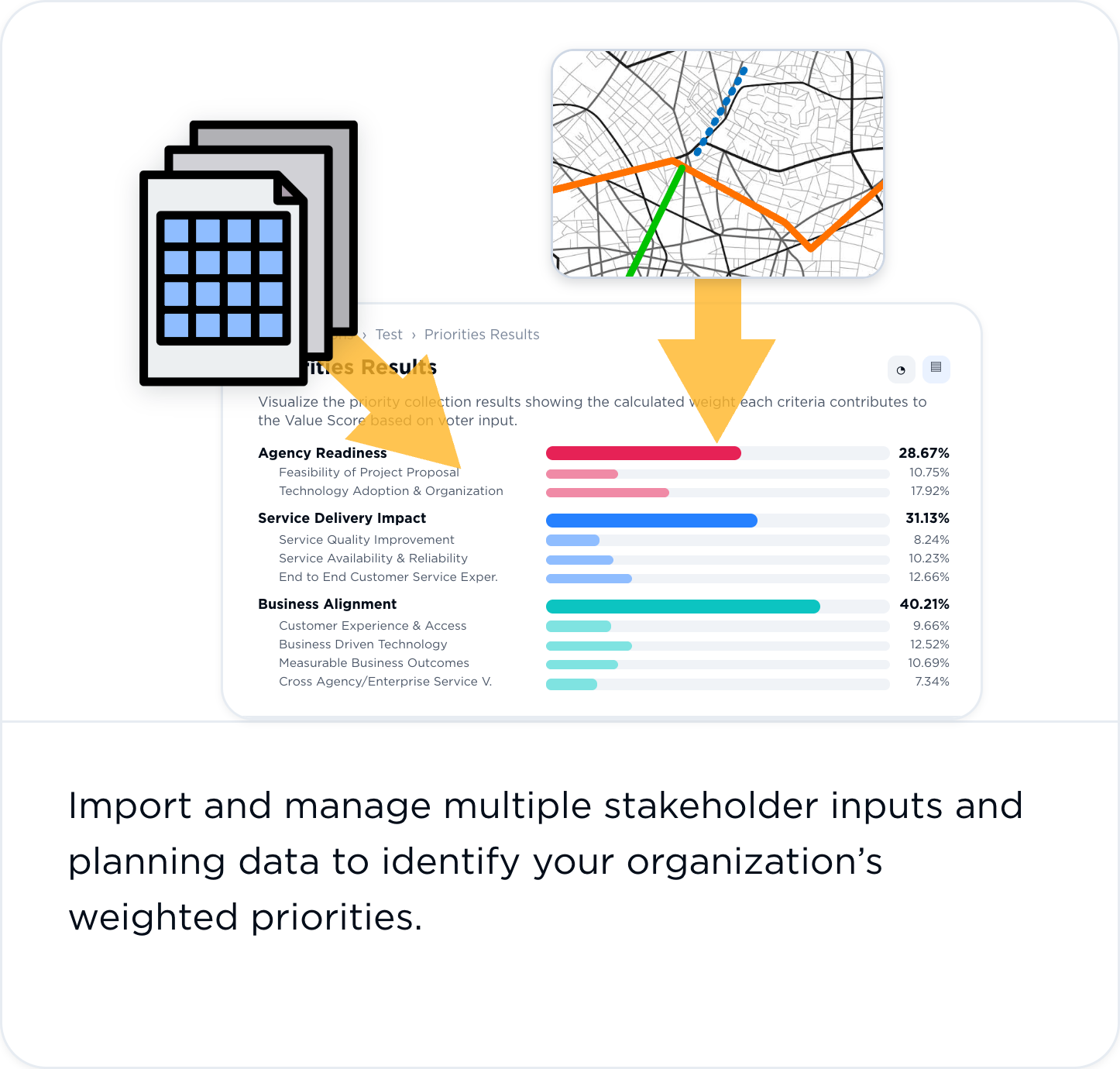
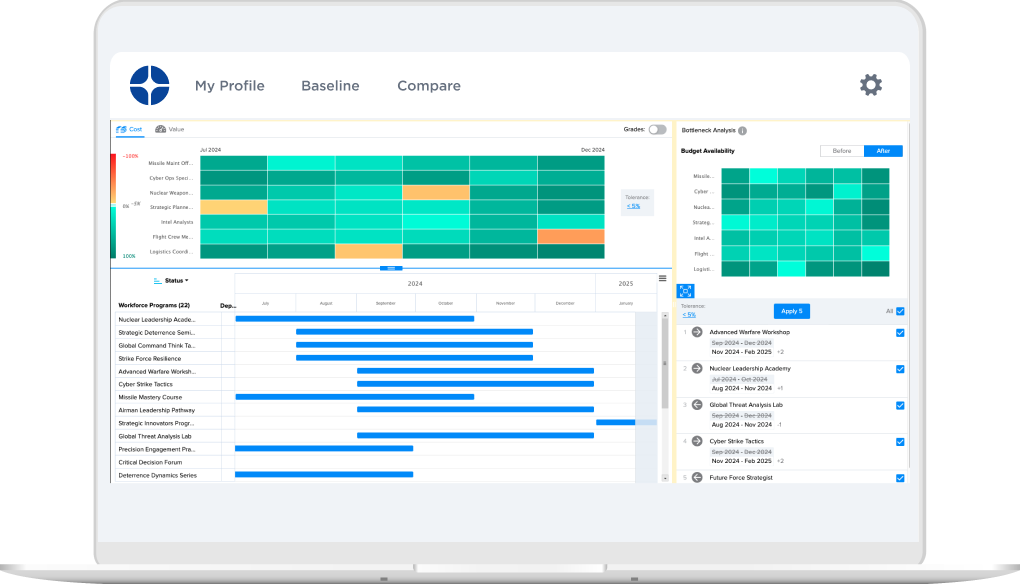
Standardize project intake, scoring, and performance calculations using consistent, reusable criteria aligned to statewide and regional goals.
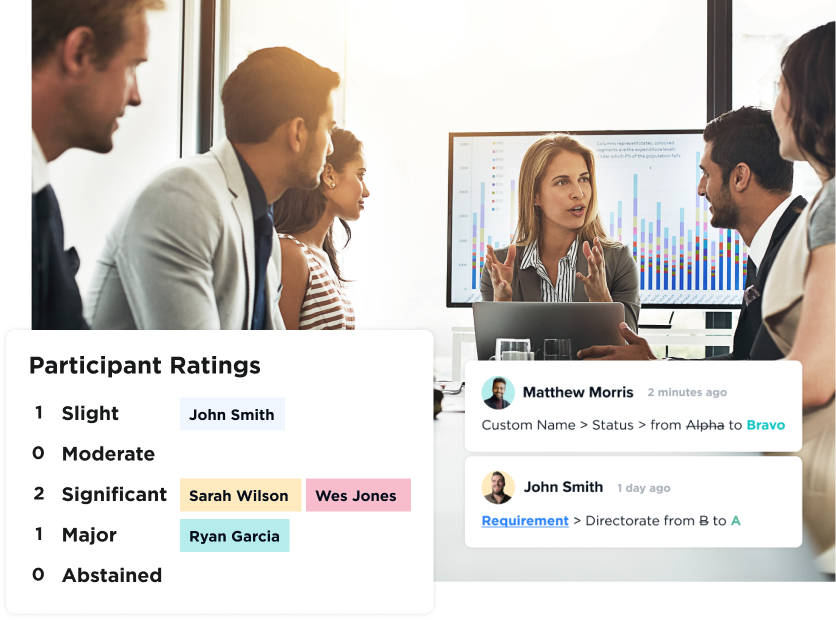
Engage stakeholders, districts, and planning partners in a shared platform that captures input, documents rationale, and strengthens alignment.
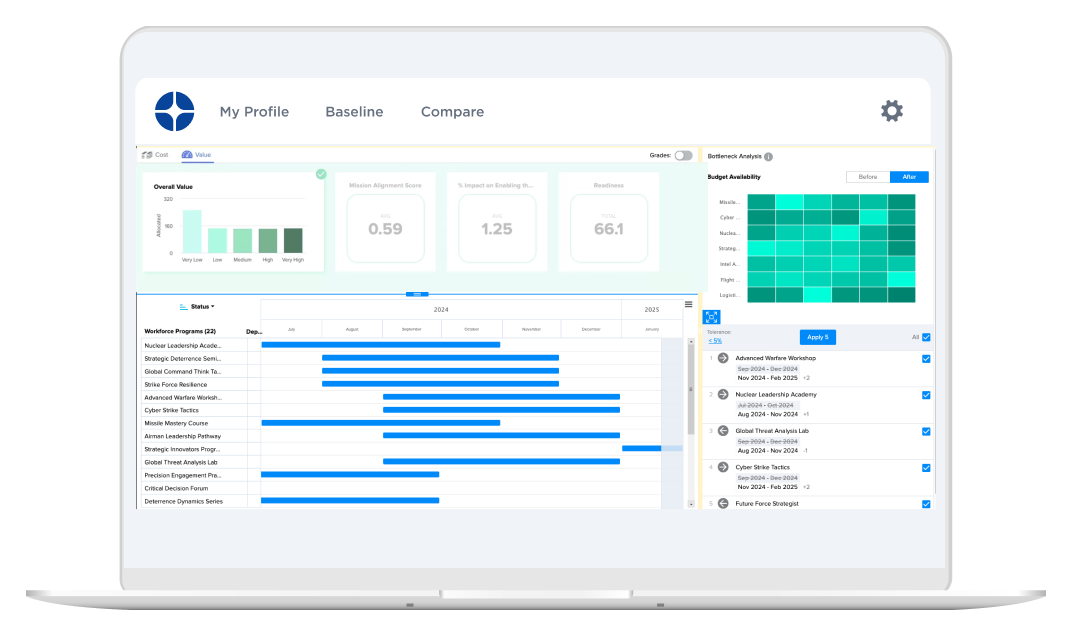
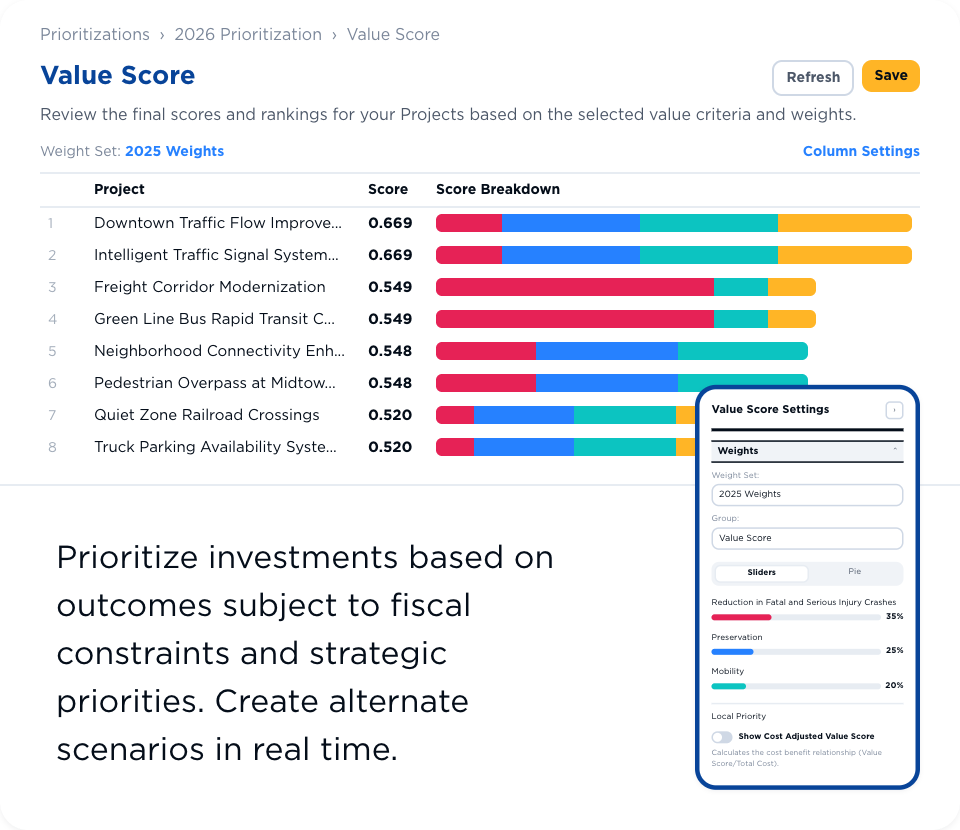
Model funding constraints, compare alternatives, and evaluate trade-offs before committing dollars to your STIP or TIP.
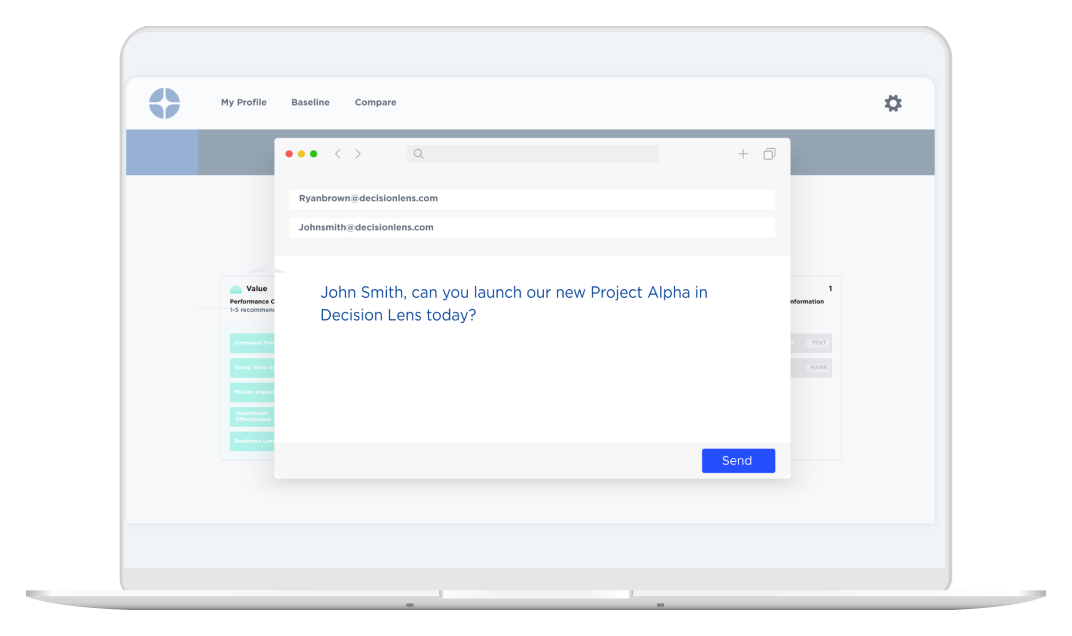
Engage multiple stakeholders and planning partners in a shared platform that allows in-app communication, tracks activity and updates and strengthens alignment.
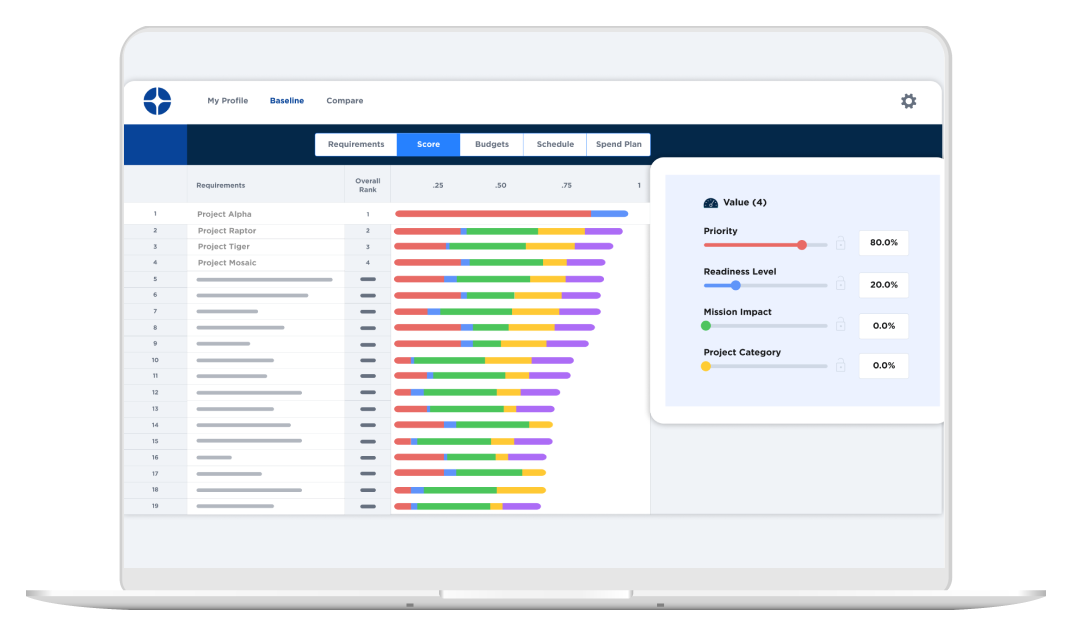
Plan, evaluate, and manage your STIP and TIP in one connected platform, using AI-assisted analysis to scale scenario evaluation while keeping decisions fully human-led and transparent.
Bring all STIP and TIP elements into a single solution, starting with plan generation.
Navigate project and plan updates more efficiently. By reducing time spent on data entry and validation, planners can keep plans aligned across projects, funding, and timelines.
Engage stakeholders and planning partners in a shared platform that supports communication, tracks activity, and improves coordination across the planning process.
Customers across the country are successfully transforming their unfunded requirements process with Decision Lens. Below are a few highlights of customers who rely on Decision Lens.
United States, Department of Transportation
Transportation agencies rely on Decision Lens to organize their data for a transparent scoring process and efficiently explore funding scenarios for all major planning efforts.
A transportation division modernized its requirements collection from a Sharepoint-based manual, non-collaborative approach to an automated, transparent system.
The new system provides a more complete view of projects with statuses, access to up-to-date data and a way to prioritize and score.
With a mix of date-driven and qualitative criteria the team is using Decision Lens to define a scoring system that is transparent to requestors.
An infusion of funds received through IIJA required a streamlining of their new project request process including collecting and tracking project data, prioritizing requests, tracking funding and scheduling projects through 2027.
Together, we built a portfolio to represent their data from intake to scheduling with powerful user permissions to foster collaboration. The team can now develop scenarios with multiple funding options to determine the best mix of projects to fund.
The group saw an opportunity to improve their inadequate and confusing spreadsheet-based approach to project evaluation.
Now, stakeholders are guided through the project prioritization process, can easily vote on priorities, and project ratings. Their main advantage is being able to coordinate this input as well as communicate the results with everyone involved.
Focused on the public-sector, Decision Lens offers various ways for agencies to purchase our software. Our Contracting Vehicles Page offers a great overview. If you're looking for more information, you can always contact sales@decisionlens.com to have your specific question answered.
As a commercial-off-the-shelf solution, Decision Lens can be rapidly deployed into your organization. To facilitate with adoption we offer a thoroughly engineered implementation plan, online training, and a dedicated customer success manager.
Our software is designed to work with your systems in a variety of ways. We offer a robust import/export suite of tools to make getting your data into our system seamless no matter what system it's coming from or going to.
Decision Lens software is relied on by government financial managers, planners, comptrollers and decision makers to prioritize, plan, and fund billions of dollars annually. We currently have customers in the Army, Navy, Air Force, intelligence community, fourth estate, federal civilian agencies, departments of transportation, and state and local government agencies.
No. While we take feedback from users to continue to evolve the software to meeting the changing needs of our customers we incorporate the broadest requirements into our development cycle. We maintain a detailed roadmap of capabilities and features we are developing.
We release new versions of the software regularly. These updates induce the introduction of new features, bug fixes, and more.
Experience the power of Decision Lens firsthand and see how it can drive efficiency, clarity, and strategic advantage in facilities maintenance.